Huddles for voice and video collaboration.
OneOrg huddles give teams a fast voice or video room inside the workspace, so live discussion can stay connected to the project, channel, and follow-up work around it.
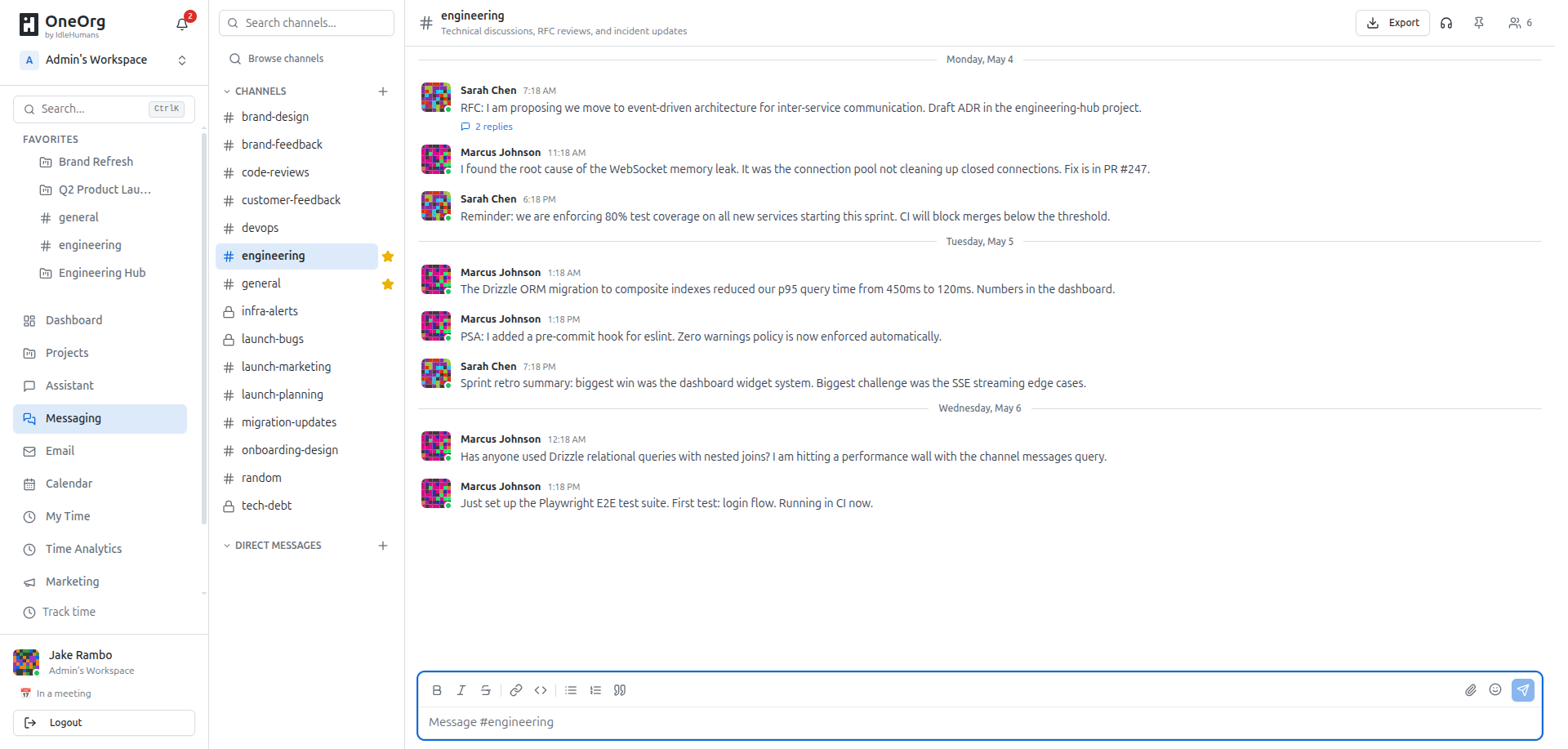
Live collaboration flow
Start a huddle when a written thread is moving too slowly or when the team needs shared context quickly. Huddles are available from the workspace experience and can be tied to the organization, project, or channel where the work is happening. That placement matters: the conversation starts near the work instead of sending people into a separate meeting tool and losing the trail.
Use huddles for live coordination, not for decisions that should disappear when the call ends. The practical pattern is simple: start the huddle in the right project or channel, resolve the question live, then put the decision, next action, or owner back into the channel or task. That keeps real-time collaboration from becoming private memory.
A good huddle has a narrow purpose. Use it to unblock a review, align on a handoff, clarify a requirement, or talk through a design choice. If the topic needs a durable record, write the outcome afterward. If the topic needs structured work, create or update the task. If the topic needs repeated process, turn the pattern into a project skill or instruction.
Teams should also set norms for when to start a huddle. Too many huddles interrupt focused work; too few force teams to over-explain complex topics in text. The healthiest pattern is to use huddles for high-bandwidth moments and keep the final operating record in OneOrg.
Use live discussion without losing the record
Use huddles when the cost of waiting is higher than the cost of interrupting people: incident triage, design review, ambiguous requirements, handoff alignment, or fast stakeholder feedback. They are especially useful when everyone needs to see the same project context while talking.
Do not use huddles as a substitute for project history. If the decision matters later, write it down after the call. If the same huddle happens repeatedly for the same process, the team probably needs clearer instructions, a better channel structure, or a repeatable skill.